Glazing: Dipping, Pouring and Brushing
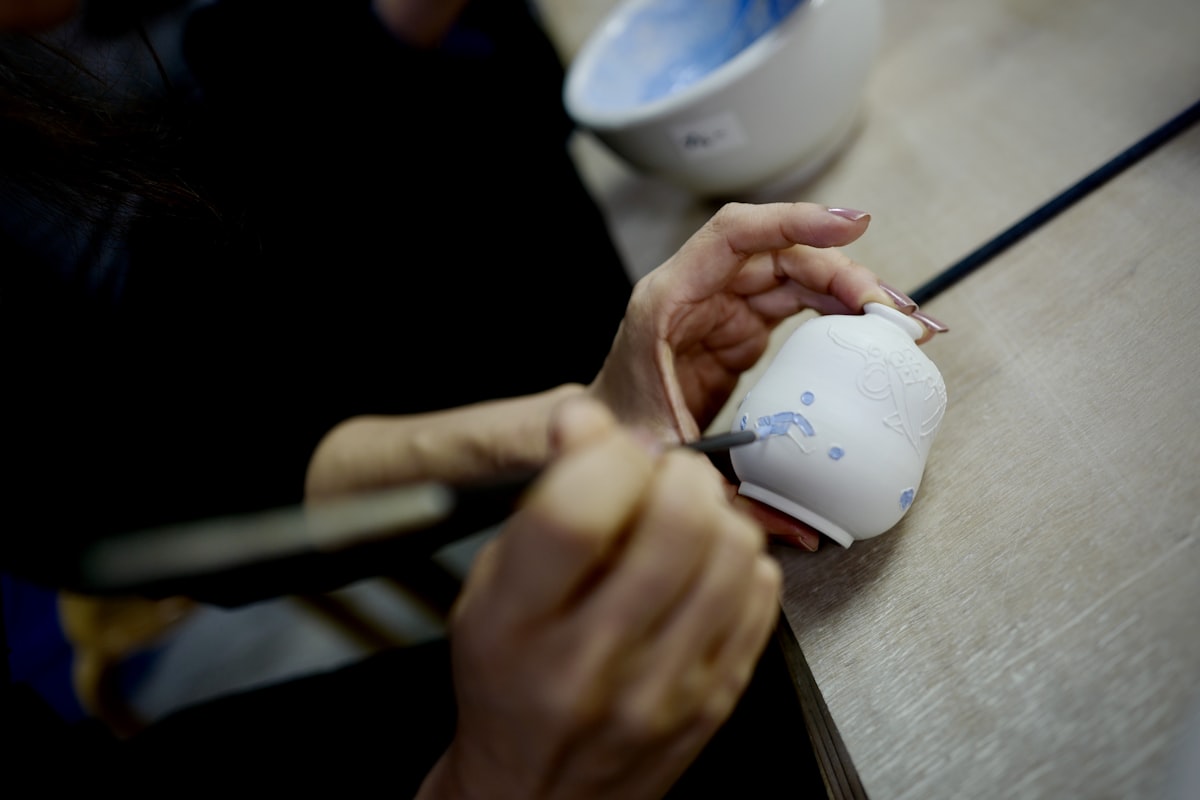
Photo: Kazuo ota / Unsplash
A raw glaze is a watery mix of minerals that looks nothing like its fired result. Applying it evenly is a craft in itself. The most common method is dipping: the maker plunges a bisque piece into a bucket of glaze for a few seconds, and the porous clay drinks up a precise, even coat.
Larger pieces may be glazed by pouring, and fine details picked out with a brush. Wherever the glaze is too thick or too thin, the fired result will show it — so consistency is everything. Wax is often painted onto the foot so it stays clean and doesn’t stick to the kiln shelf.
At this stage a pot is at its least impressive: chalky, dull and grey. Only the firing will reveal the colour hidden inside. It takes experience — and a little faith — to glaze well.